
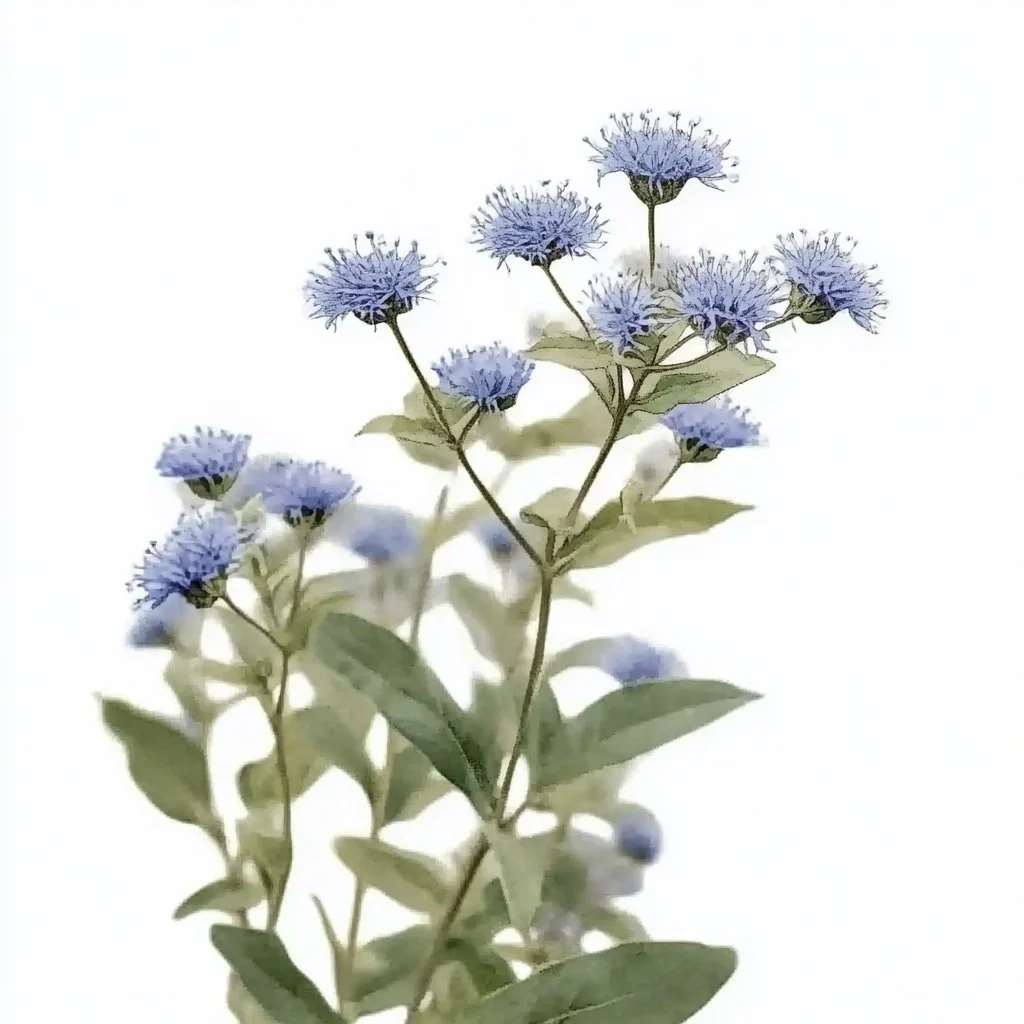
When blue mistflower blooms in late summer, the effect is striking: a low cloud of powder-blue just when most other plants are winding down. Its species name, coelestinum, means “celestial” or “heavenly,” a nod to its sky-blue color, and the name earns it.
Native range: New Jersey south to Florida, west to Nebraska and Texas
Size: 1-3 feet tall and wide; quickly spreads by rhizome and self-seeding
Growing conditions: Full sun to part shade; average-wet soil
Bloom period: August-frost
Wildlife value: Exceptional late-season nectar source for monarchs, swallowtails, skippers, and many other butterflies; attracts native bees and moths; host plant for over 20 species of Lepidoptera; seeds eaten by birds
Garden benefits: A great plant for extending the pollinator season into fall; pairs beautifully with goldenrods and late asters; deer resistant; can spread aggressively
When blue mistflower blooms in late summer, the effect is striking: a low cloud of powder-blue just when most other plants are winding down. Its species name, coelestinum, means “celestial” or “heavenly,” a nod to its sky-blue color, and the name earns it.
Native range: New Jersey south to Florida, west to Nebraska and Texas
Size: 1-3 feet tall and wide; quickly spreads by rhizome and self-seeding
Growing conditions: Full sun to part shade; average-wet soil
Bloom period: August-frost
Wildlife value: Exceptional late-season nectar source for monarchs, swallowtails, skippers, and many other butterflies; attracts native bees and moths; host plant for over 20 species of Lepidoptera; seeds eaten by birds
Garden benefits: A great plant for extending the pollinator season into fall; pairs beautifully with goldenrods and late asters; deer resistant; can spread aggressively