
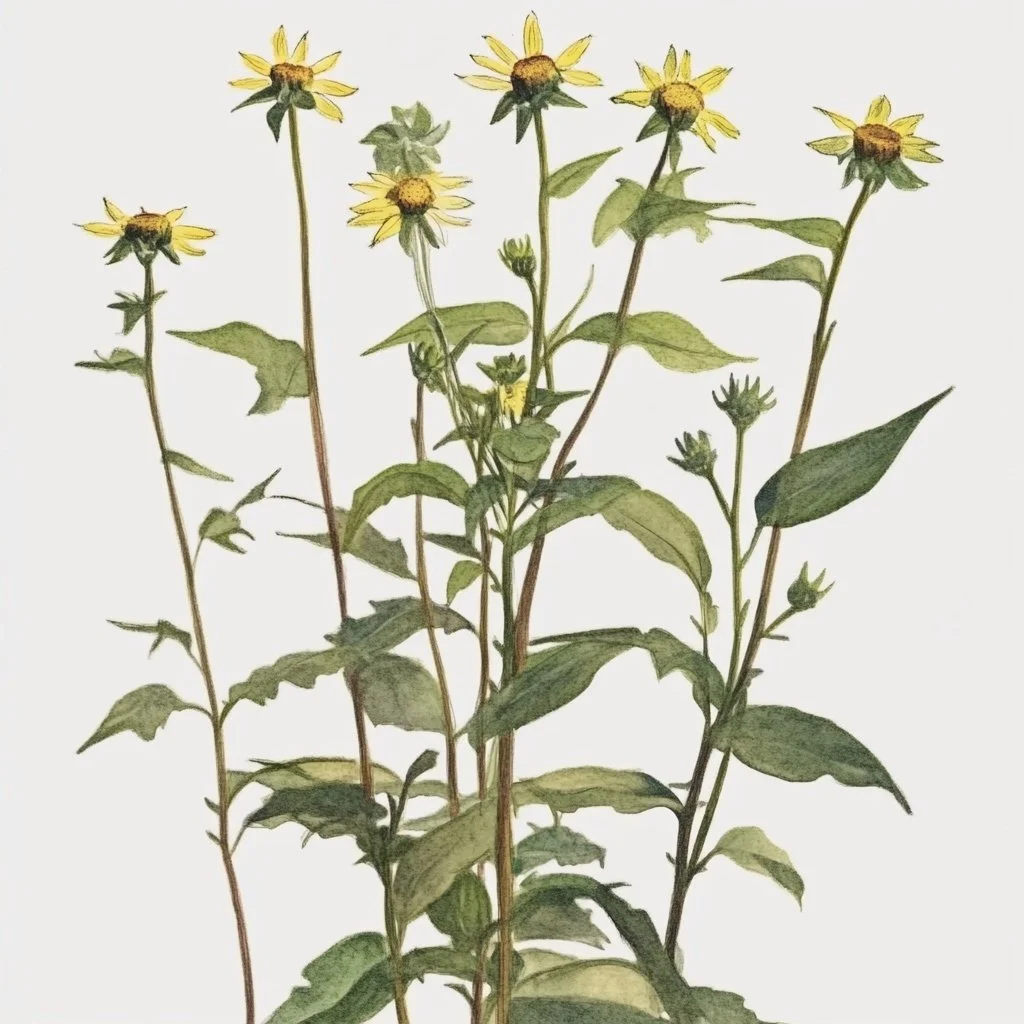
A dramatic native perennial that creates a stunning vertical presence in the garden, cup plant produces abundant bright yellow sunflower-like blooms and distinctive perfoliate leaves that form water-collecting cups along square stems. This robust wildflower serves as a natural bird bath while providing exceptional late-season nectar when many other flowers have finished blooming.
Native range: Eastern and central North America, from southeastern Canada to the southeastern United States
Size: 6-10 feet tall, 2-3 feet wide, space 3-4 feet apart
Growing conditions: Full sun, moist to wet soils; tolerates clay, sandy, and average soils once established
Bloom period: July through September
Wildlife value: Attracts numerous pollinators including bees, butterflies, moths, and beneficial wasps; goldfinches and other songbirds drink from leaf cups and eat seeds; hosts gall wasps and various moth species; provides excellent cover and nesting sites for birds
Garden benefits: Low maintenance, excellent for rain gardens and wet areas, provides privacy screening, stunning cut flower, drought tolerant once established, self-seeds readily
A dramatic native perennial that creates a stunning vertical presence in the garden, cup plant produces abundant bright yellow sunflower-like blooms and distinctive perfoliate leaves that form water-collecting cups along square stems. This robust wildflower serves as a natural bird bath while providing exceptional late-season nectar when many other flowers have finished blooming.
Native range: Eastern and central North America, from southeastern Canada to the southeastern United States
Size: 6-10 feet tall, 2-3 feet wide, space 3-4 feet apart
Growing conditions: Full sun, moist to wet soils; tolerates clay, sandy, and average soils once established
Bloom period: July through September
Wildlife value: Attracts numerous pollinators including bees, butterflies, moths, and beneficial wasps; goldfinches and other songbirds drink from leaf cups and eat seeds; hosts gall wasps and various moth species; provides excellent cover and nesting sites for birds
Garden benefits: Low maintenance, excellent for rain gardens and wet areas, provides privacy screening, stunning cut flower, drought tolerant once established, self-seeds readily