
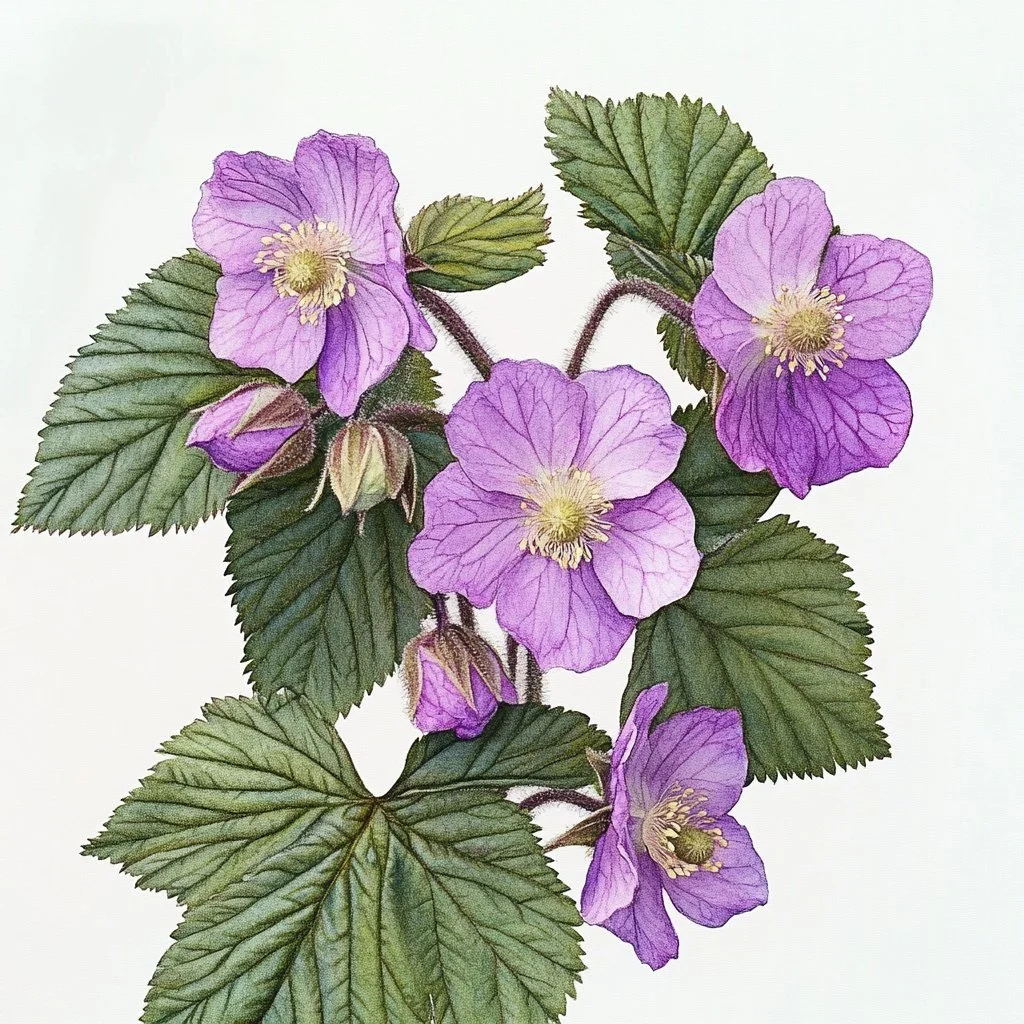
Large, fragrant, rose-purple flowers are among the showiest of any native shrub, and the broad, maple-like leaves are attractive all season. Unlike other raspberries, it has no thorns, making it a pleasure to work around.
Native range: Eastern North America from Maine west to Michigan, south through the Appalachians to Georgia and Alabama
Size: 2-5 feet tall, spreads via root suckers
Growing conditions: Full sun to part shade; moist, fertile, well-drained soil; tolerates infertile and sandy soils; adaptable to most conditions except standing water
Bloom period: June-August
Wildlife value: host for 161+ caterpillar species including several sphinx moths; special value to native bees
Garden benefits: Thornless; fragrant flowers; bold foliage; great for woodland edges, naturalized areas, and difficult slopes; attracts hummingbirds
Large, fragrant, rose-purple flowers are among the showiest of any native shrub, and the broad, maple-like leaves are attractive all season. Unlike other raspberries, it has no thorns, making it a pleasure to work around.
Native range: Eastern North America from Maine west to Michigan, south through the Appalachians to Georgia and Alabama
Size: 2-5 feet tall, spreads via root suckers
Growing conditions: Full sun to part shade; moist, fertile, well-drained soil; tolerates infertile and sandy soils; adaptable to most conditions except standing water
Bloom period: June-August
Wildlife value: host for 161+ caterpillar species including several sphinx moths; special value to native bees
Garden benefits: Thornless; fragrant flowers; bold foliage; great for woodland edges, naturalized areas, and difficult slopes; attracts hummingbirds