
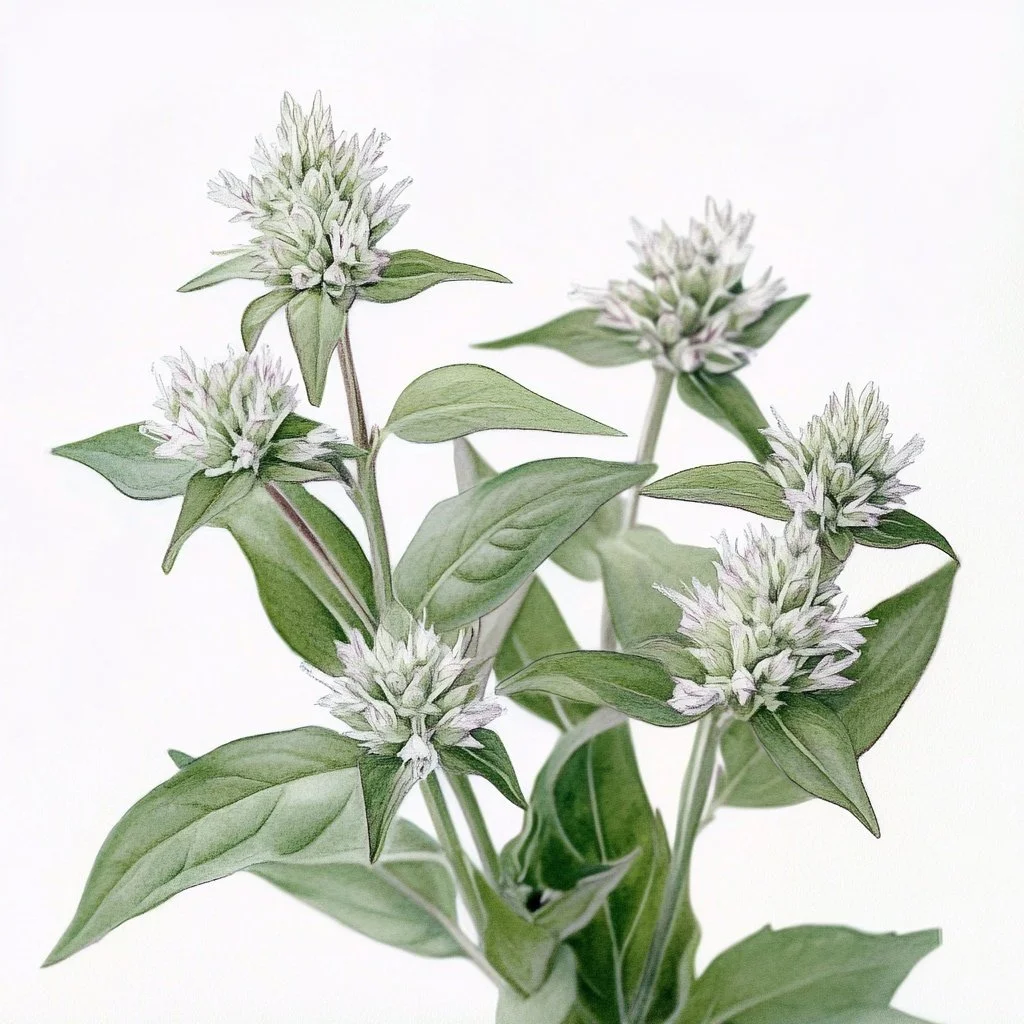
The most visually dramatic of the mountain mints. As bloom time approaches, the upper leaves and bracts turn a striking silvery-white creating a two-toned effect that's distinctive from a distance. The dense flower clusters are irresistible to pollinators
Native range: Eastern United States from New Hampshire south to Georgia and west to the Mississippi; listed as endangered in Vermont and New Hampshire
Size: 3–4 feet tall and wide; spreads by rhizome
Growing conditions: Full sun to part shade; average to dry, well-drained rocky, gravelly, or sandy soil; drought tolerant; very adaptable
Bloom period: July-August
Wildlife value: Among the very best pollinator plants for diversity. Attracts bees, wasps, skippers, butterflies, beetles, and flies in extraordinary numbers
Garden benefits: Exceptional silvery foliage display in late summer; outstanding pollinator value; deer resistant; low maintenance
The most visually dramatic of the mountain mints. As bloom time approaches, the upper leaves and bracts turn a striking silvery-white creating a two-toned effect that's distinctive from a distance. The dense flower clusters are irresistible to pollinators
Native range: Eastern United States from New Hampshire south to Georgia and west to the Mississippi; listed as endangered in Vermont and New Hampshire
Size: 3–4 feet tall and wide; spreads by rhizome
Growing conditions: Full sun to part shade; average to dry, well-drained rocky, gravelly, or sandy soil; drought tolerant; very adaptable
Bloom period: July-August
Wildlife value: Among the very best pollinator plants for diversity. Attracts bees, wasps, skippers, butterflies, beetles, and flies in extraordinary numbers
Garden benefits: Exceptional silvery foliage display in late summer; outstanding pollinator value; deer resistant; low maintenance