
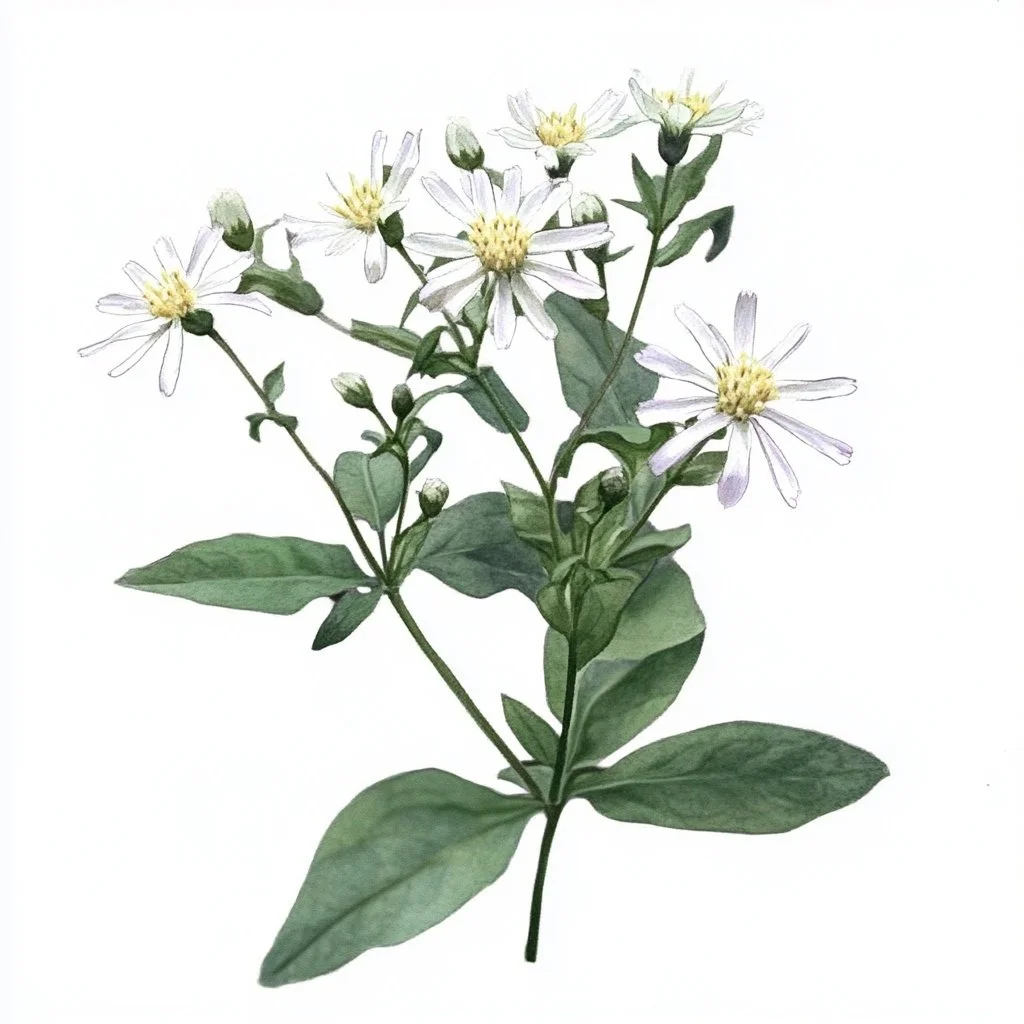
One of the earliest asters to bloom in northeastern forests, and beautiful even when not in flower. Its leaves are up to 8 inches across and form dense, lush colonies all season long, making it one of the few native groundcovers that can thrive under deep shade. Pale violet-white flowers with yellow centers arrive in late summer.
Native range: Nova Scotia to Manitoba, south through New England and the Appalachians to Georgia; west to Minnesota
Size: 1-3 feet tall when flowering; spreads by rhizome to form colonies
Growing conditions: Part shade to full shade; moist to dry soil
Bloom period: July–October
Wildlife value: Attracts butterflies and native bees; seeds eaten by birds
Garden benefits: Outstanding foliage groundcover for shade all season; deer resistant; low maintenance
One of the earliest asters to bloom in northeastern forests, and beautiful even when not in flower. Its leaves are up to 8 inches across and form dense, lush colonies all season long, making it one of the few native groundcovers that can thrive under deep shade. Pale violet-white flowers with yellow centers arrive in late summer.
Native range: Nova Scotia to Manitoba, south through New England and the Appalachians to Georgia; west to Minnesota
Size: 1-3 feet tall when flowering; spreads by rhizome to form colonies
Growing conditions: Part shade to full shade; moist to dry soil
Bloom period: July–October
Wildlife value: Attracts butterflies and native bees; seeds eaten by birds
Garden benefits: Outstanding foliage groundcover for shade all season; deer resistant; low maintenance