
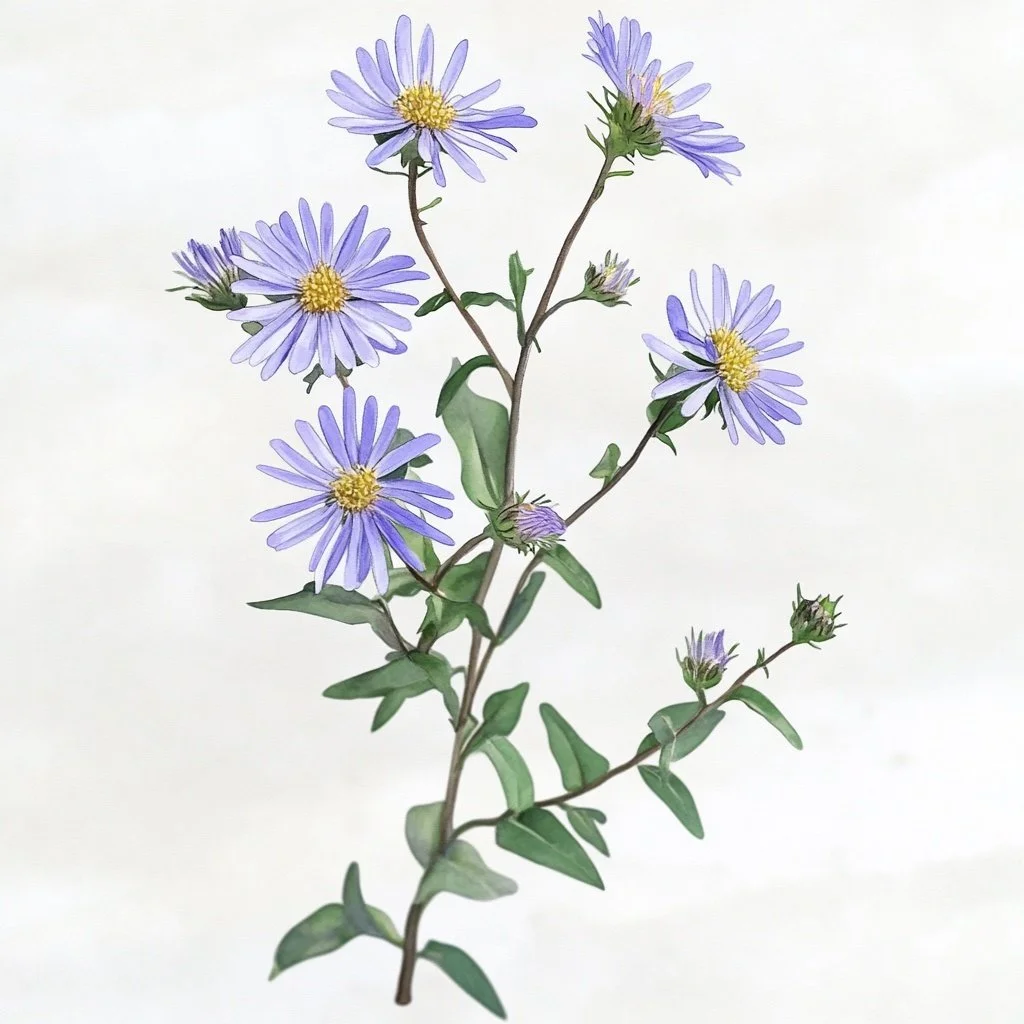
Also called spreading aster for its graceful, arching habit, this native sends out slender stems that each terminate in a single violet-blue flower with a yellow cente. It blooms after many asters have finished, making it one of the last reliable nectar sources of the season.
Native range: Eastern and central United States, Maine to Minnesota south to Florida and Texas
Size: 2–3 feet tall, 1.5–2 feet wide
Growing conditions: Full sun to part shade; dry to average, well-drained sandy or rocky soil; drought tolerant; good salt tolerance
Bloom period: August - October
Wildlife value: Attracts butterflies and specialized native bees; larval host for over 100 species of Lepidoptera including the Silvery Checkerspot and Pearl Crescent butterflies
Garden benefits: Elegant, airy habit; low maintenance; late blooms; deer resistant
Also called spreading aster for its graceful, arching habit, this native sends out slender stems that each terminate in a single violet-blue flower with a yellow cente. It blooms after many asters have finished, making it one of the last reliable nectar sources of the season.
Native range: Eastern and central United States, Maine to Minnesota south to Florida and Texas
Size: 2–3 feet tall, 1.5–2 feet wide
Growing conditions: Full sun to part shade; dry to average, well-drained sandy or rocky soil; drought tolerant; good salt tolerance
Bloom period: August - October
Wildlife value: Attracts butterflies and specialized native bees; larval host for over 100 species of Lepidoptera including the Silvery Checkerspot and Pearl Crescent butterflies
Garden benefits: Elegant, airy habit; low maintenance; late blooms; deer resistant