
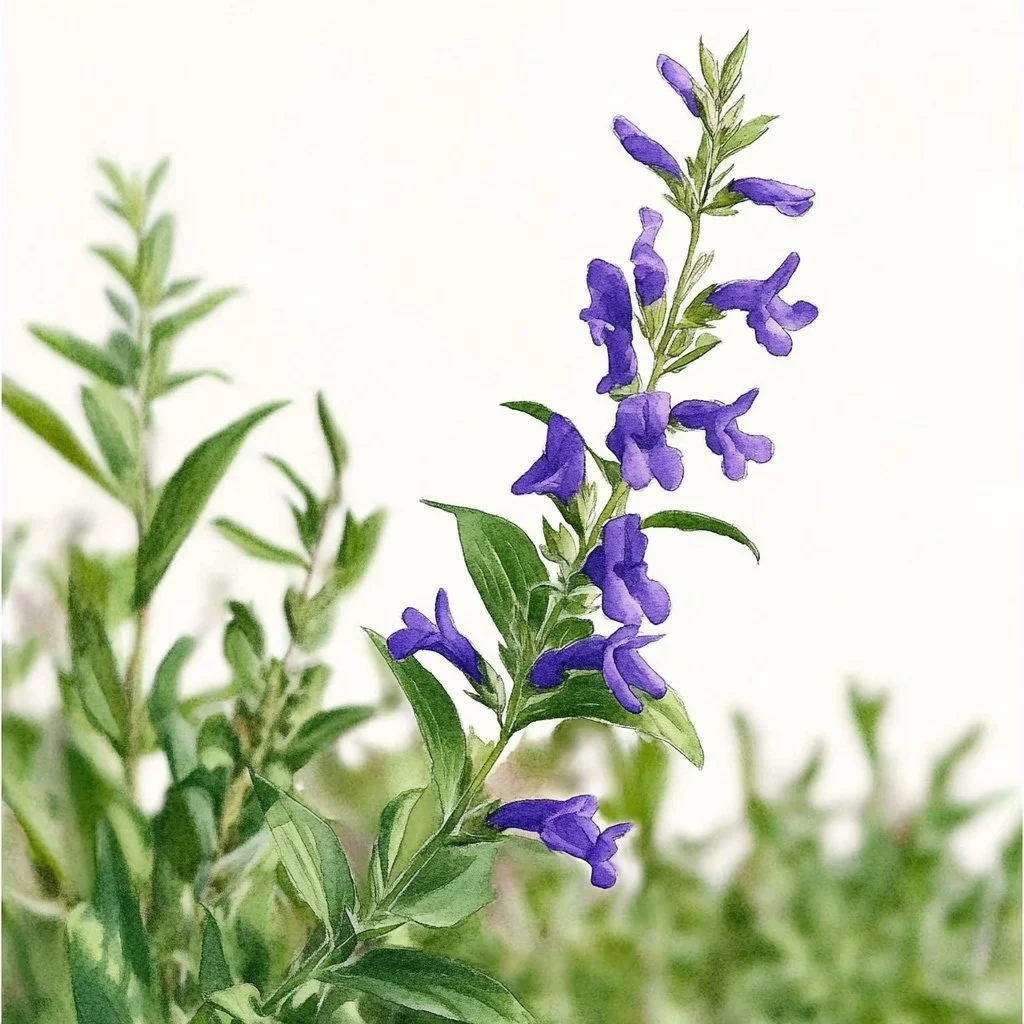
A quietly beautiful native of wet woodlands, producing small, helmet-shaped flowers in soft blue to lavender from midsummer into fall. The name comes from the once-held belief that it could cure rabies. It can't! Though it has a long history of use as an herbal nerve tonic and sedative.
Native range: Newfoundland west to British Columbia, south to Florida
Size: 2–3 feet tall; rhizomatous but not aggressive
Growing conditions: Part to full shade; moist to wet soil; tolerates swampy conditions; excellent for shaded rain gardens and wet woodland edges
Bloom period: July–October
Wildlife value: Attracts long-tongued native bees
Garden benefits: Rare blue-flowering option for shade and wet sites; long bloom period; deer and rabbit resistant