
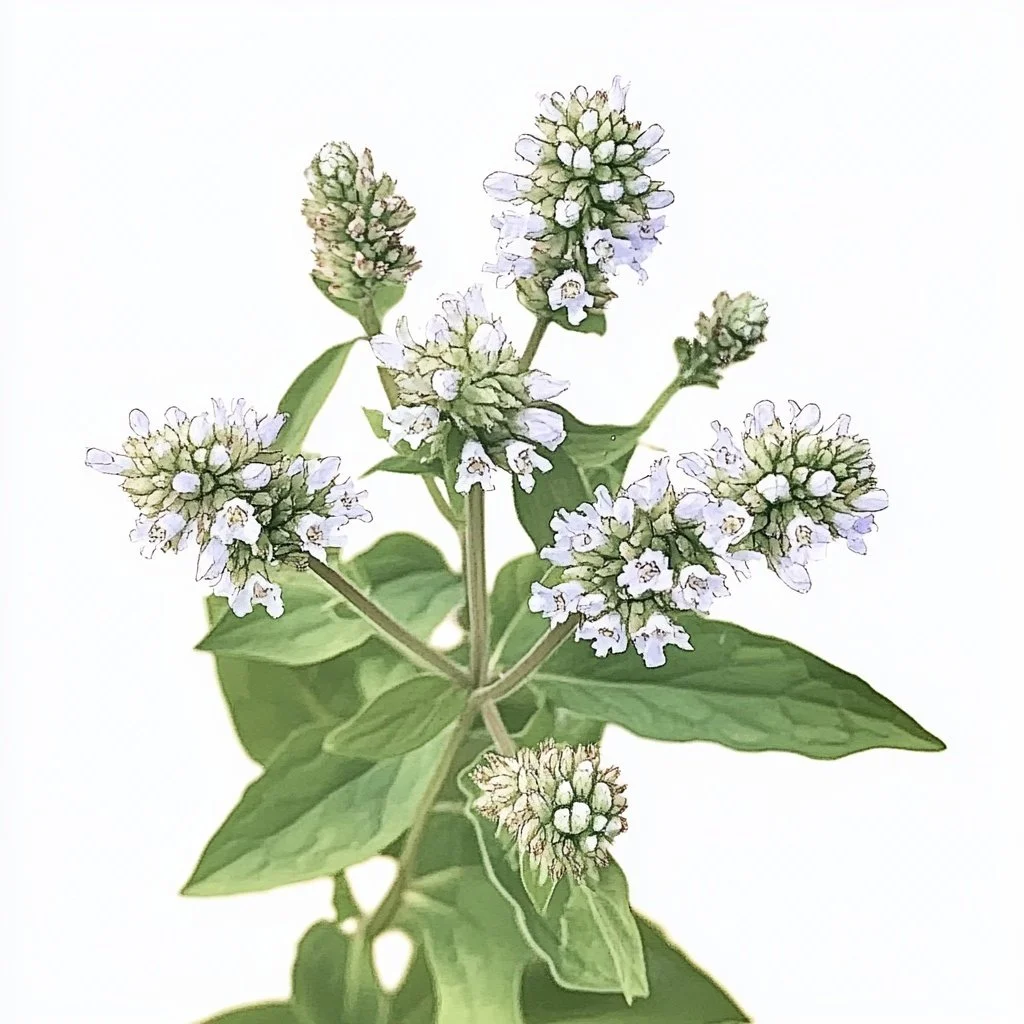
Few native plants come close to narrowleaf mountain mint for sheer pollinator activity. When it blooms, the dense clusters of tiny white flowers are in constant motion with bees, wasps, butterflies, and beneficial insects of every description. Will bloom in very dry and sunny conditions.
Native range: Eastern United States, Maine to Florida and west to Kansas and Nebraska
Size: 8"-16" tall and 12"-36" wide; spreads by rhizome to form colonies
Growing conditions: Full sun to part shade; average to dry soil; tolerates clay, rocky soils, and drought; very low maintenance once established
Bloom period: July–September
Wildlife value: Among the most valuable native pollinator plants, documented attracting 29+ species of Lepidoptera and 20+ species of bees and wasps; seeds eaten by birds; leaves used for flavoring teas
Garden benefits: Exceptional wildlife value in a compact plant; silvery foliage is attractive all season; drought and clay tolerant; can spread.
Few native plants come close to narrowleaf mountain mint for sheer pollinator activity. When it blooms, the dense clusters of tiny white flowers are in constant motion with bees, wasps, butterflies, and beneficial insects of every description. Will bloom in very dry and sunny conditions.
Native range: Eastern United States, Maine to Florida and west to Kansas and Nebraska
Size: 8"-16" tall and 12"-36" wide; spreads by rhizome to form colonies
Growing conditions: Full sun to part shade; average to dry soil; tolerates clay, rocky soils, and drought; very low maintenance once established
Bloom period: July–September
Wildlife value: Among the most valuable native pollinator plants, documented attracting 29+ species of Lepidoptera and 20+ species of bees and wasps; seeds eaten by birds; leaves used for flavoring teas
Garden benefits: Exceptional wildlife value in a compact plant; silvery foliage is attractive all season; drought and clay tolerant; can spread.