
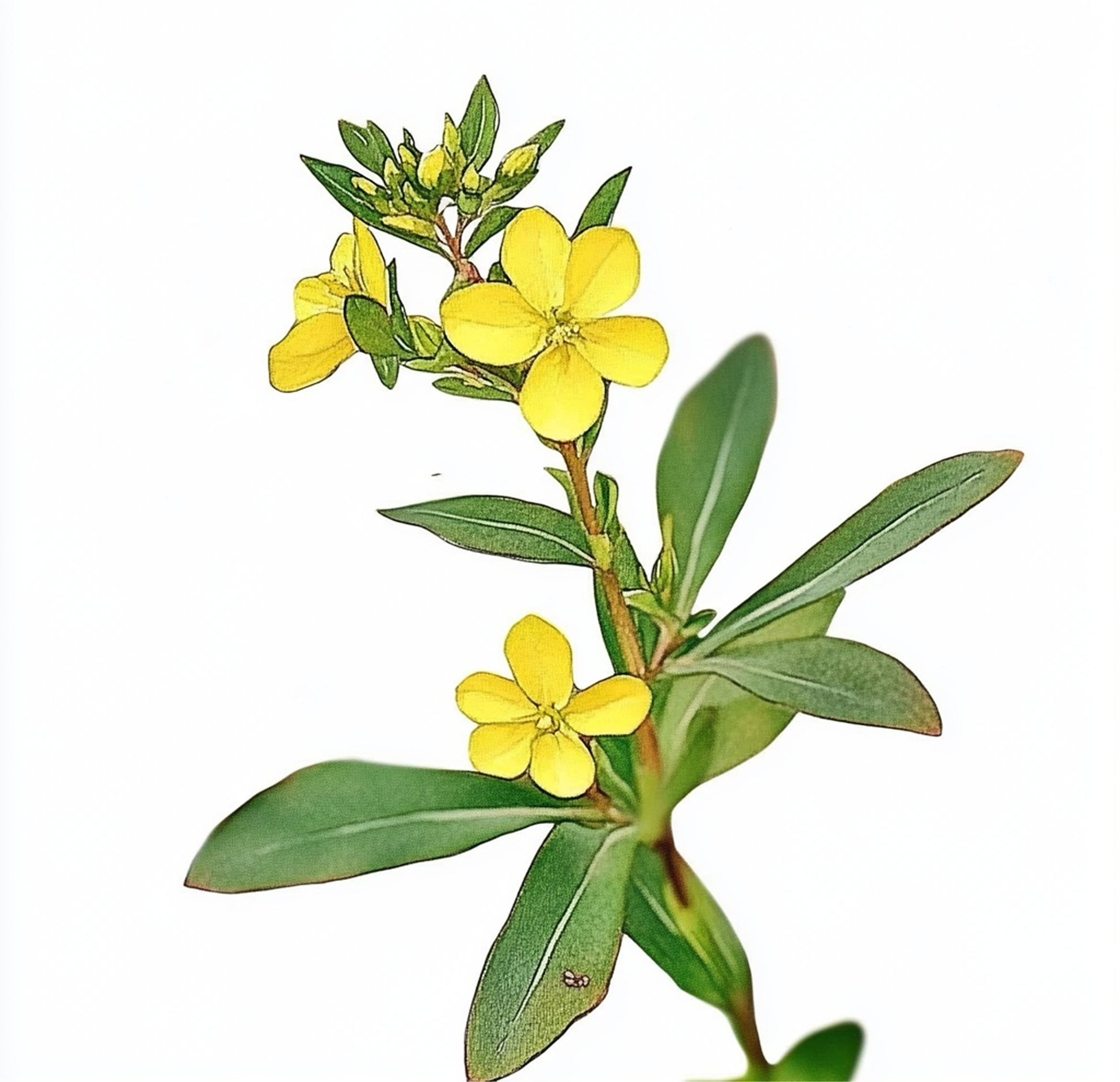
Named for its most distinctive feature: nearly perfect cubic seed capsules that rattle when shaken and persist on the stems all winter. The small, four-petaled yellow flowers are fleeting but attractive, and deep red fall foliage adds seasonal interest.
Native range: Massachusetts south to Florida, west to Texas, north to Nebraska; southern Ontario
Size: 1.5–3.5 feet tall; multi-stemmed, branching
Growing conditions: Full sun to part shade; wet to moist soil; tolerates sandy, acidic, and periodically flooded conditions; excellent for pond margins and rain gardens
Bloom period: June–September
Wildlife value: Nectar source for bumblebees, carpenter bees, and leafcutter bees; seed capsules eaten by sparrows, mice, and waterfowl
Garden benefits: Distinctive cubic seedpods provide year-round structure; attractive fall color; good for wet naturalized areas and water garden edges; self-seeds freely in optimal conditions
Named for its most distinctive feature: nearly perfect cubic seed capsules that rattle when shaken and persist on the stems all winter. The small, four-petaled yellow flowers are fleeting but attractive, and deep red fall foliage adds seasonal interest.
Native range: Massachusetts south to Florida, west to Texas, north to Nebraska; southern Ontario
Size: 1.5–3.5 feet tall; multi-stemmed, branching
Growing conditions: Full sun to part shade; wet to moist soil; tolerates sandy, acidic, and periodically flooded conditions; excellent for pond margins and rain gardens
Bloom period: June–September
Wildlife value: Nectar source for bumblebees, carpenter bees, and leafcutter bees; seed capsules eaten by sparrows, mice, and waterfowl
Garden benefits: Distinctive cubic seedpods provide year-round structure; attractive fall color; good for wet naturalized areas and water garden edges; self-seeds freely in optimal conditions