
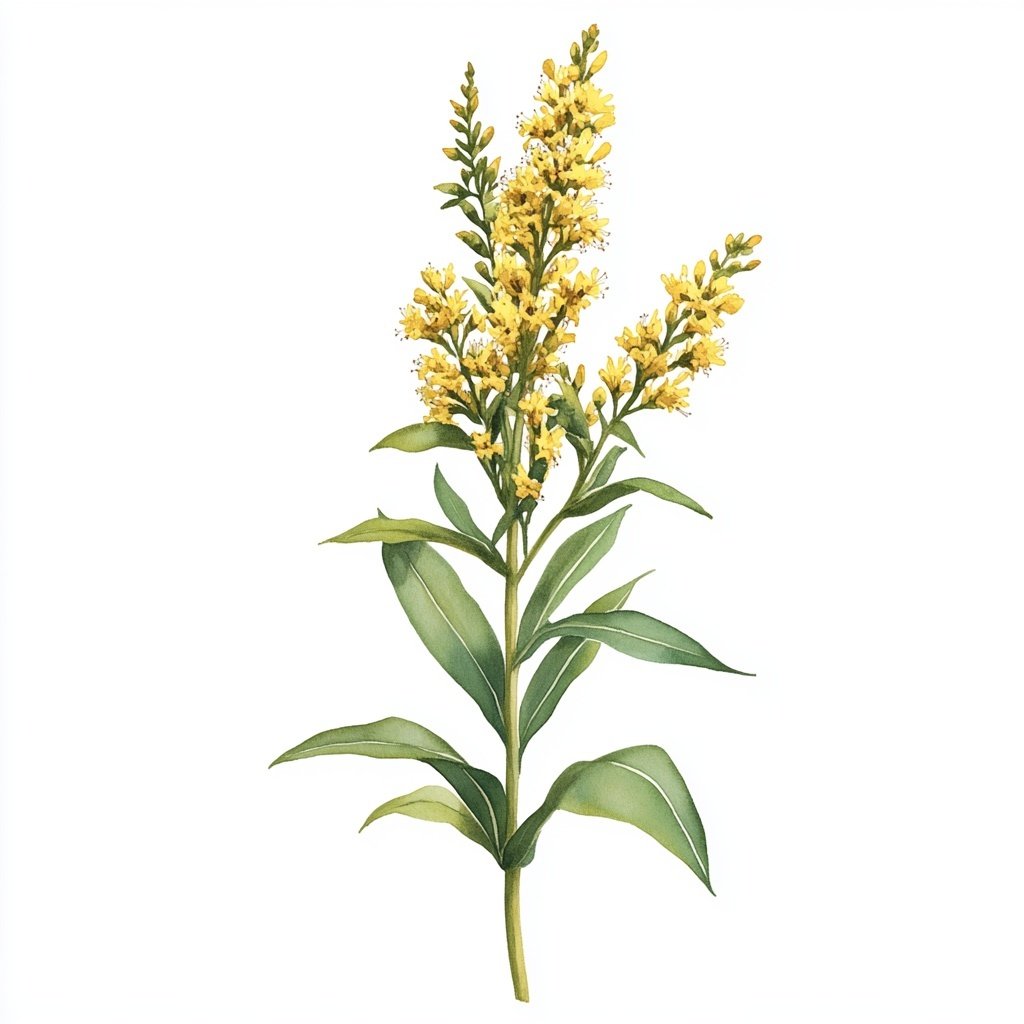
Often considered the most spectacular of the native goldenrods, showy goldenrod earns its name with an unusually upright, cylindrical flower plume that stays erect rather than arching or drooping like most goldenrods. The deep golden color and strong, tidy form make it one of the most garden-worthy goldenrods available.
Native range: New Hampshire south to Georgia, west to Wisconsin, Kansas, and Oklahoma
Size: 3-5 feet tall, 3-4 feet wide; spreads moderately by rhizome
Growing conditions: Full sun; average to dry, well-drained soil; tolerates poor and clay soils; drought tolerant; less aggressive than many other goldenrods
Bloom period: August-November
Wildlife value: Major nectar source for bees, butterflies, and Monarch migrants; host plant for over 100 species of Lepidoptera; supports 36 species of specialist bees
Garden benefits: Among the most upright and well-behaved goldenrods; outstanding fall color; deer resistant; low maintenance
Often considered the most spectacular of the native goldenrods, showy goldenrod earns its name with an unusually upright, cylindrical flower plume that stays erect rather than arching or drooping like most goldenrods. The deep golden color and strong, tidy form make it one of the most garden-worthy goldenrods available.
Native range: New Hampshire south to Georgia, west to Wisconsin, Kansas, and Oklahoma
Size: 3-5 feet tall, 3-4 feet wide; spreads moderately by rhizome
Growing conditions: Full sun; average to dry, well-drained soil; tolerates poor and clay soils; drought tolerant; less aggressive than many other goldenrods
Bloom period: August-November
Wildlife value: Major nectar source for bees, butterflies, and Monarch migrants; host plant for over 100 species of Lepidoptera; supports 36 species of specialist bees
Garden benefits: Among the most upright and well-behaved goldenrods; outstanding fall color; deer resistant; low maintenance