
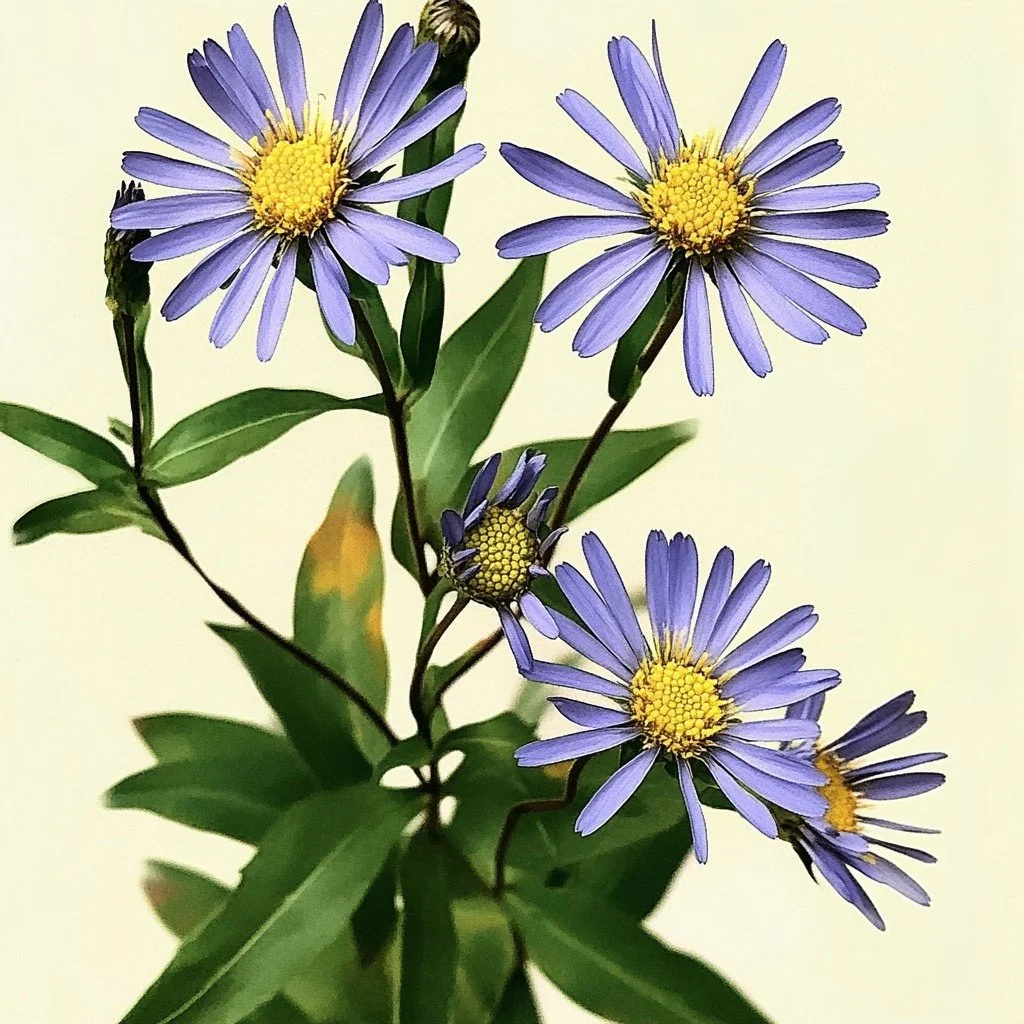
Among the showiest of the native blue asters, this species covers itself in lavender-blue flowers with yellow centers from late summer into fall, just when the garden needs it most. Its smooth, blue-gray foliage looks great all season and helps distinguish it from rougher-leaved asters.
Native range: Throughout much of North America, from Maine to the Yukon south to Georgia and the Southwest
Size: 2–4 feet tall,12"-18" spread
Growing conditions: Full sun to part shade; average to dryl; drought tolerant once established
Bloom period: August–October
Wildlife value: Attracts bees, butterflies, and beneficial insects; larval host for Pearl Crescent and Silvery Checkerspot butterflies; seeds eaten by songbirds and small mammals
Garden benefits: Stays upright without staking; deer resistant; low maintenance; excellent late-season color; pairs well with goldenrods and grasses.
Among the showiest of the native blue asters, this species covers itself in lavender-blue flowers with yellow centers from late summer into fall, just when the garden needs it most. Its smooth, blue-gray foliage looks great all season and helps distinguish it from rougher-leaved asters.
Native range: Throughout much of North America, from Maine to the Yukon south to Georgia and the Southwest
Size: 2–4 feet tall,12"-18" spread
Growing conditions: Full sun to part shade; average to dryl; drought tolerant once established
Bloom period: August–October
Wildlife value: Attracts bees, butterflies, and beneficial insects; larval host for Pearl Crescent and Silvery Checkerspot butterflies; seeds eaten by songbirds and small mammals
Garden benefits: Stays upright without staking; deer resistant; low maintenance; excellent late-season color; pairs well with goldenrods and grasses.