
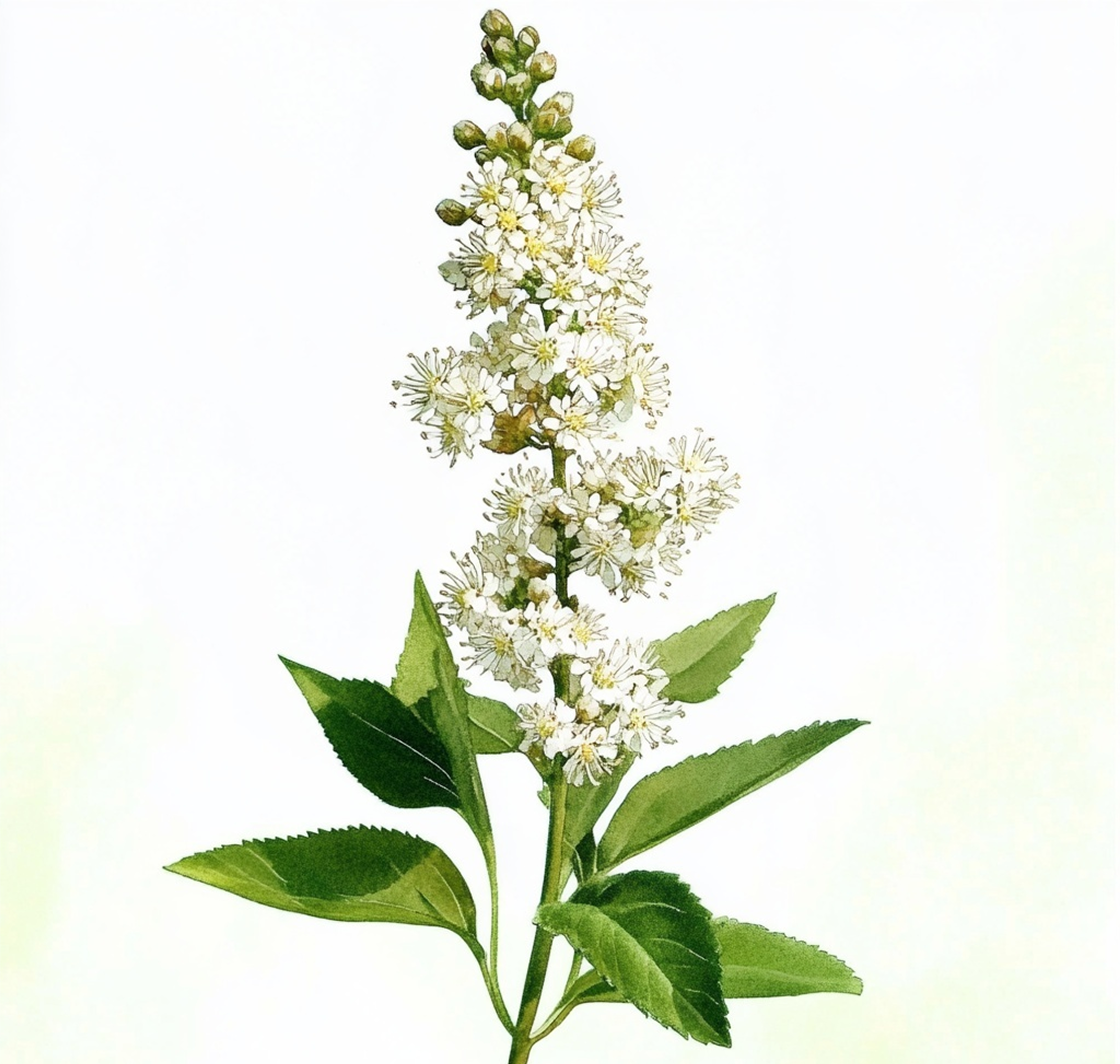
A graceful native shrub with fine-textured, upright stems topped in midsummer by fragrant, conical spires of tiny white flowers. The native alternative to Japanese spirea, with similar structure and much greater ecological value. Foliage turns soft yellow in fall.
Native range: New Brunswick and Ontario south through New England and the Great Lakes to North Carolina
Size: 3–6 feet tall and wide; suckering, colony-forming
Growing conditions: Full sun to part shade; moist to wet, acidic soil; tolerates periodic flooding; does not perform well in dry conditions
Bloom period: June–September
Wildlife value: Attracts bees, butterflies, and beneficial insects; larval host for the Spring Azure butterfly and many species of Lepidoptera; seeds and cover used by birds
Garden benefits: Excellent native spirea; fragrant flowers; good fall color; deer resistant
A graceful native shrub with fine-textured, upright stems topped in midsummer by fragrant, conical spires of tiny white flowers. The native alternative to Japanese spirea, with similar structure and much greater ecological value. Foliage turns soft yellow in fall.
Native range: New Brunswick and Ontario south through New England and the Great Lakes to North Carolina
Size: 3–6 feet tall and wide; suckering, colony-forming
Growing conditions: Full sun to part shade; moist to wet, acidic soil; tolerates periodic flooding; does not perform well in dry conditions
Bloom period: June–September
Wildlife value: Attracts bees, butterflies, and beneficial insects; larval host for the Spring Azure butterfly and many species of Lepidoptera; seeds and cover used by birds
Garden benefits: Excellent native spirea; fragrant flowers; good fall color; deer resistant