
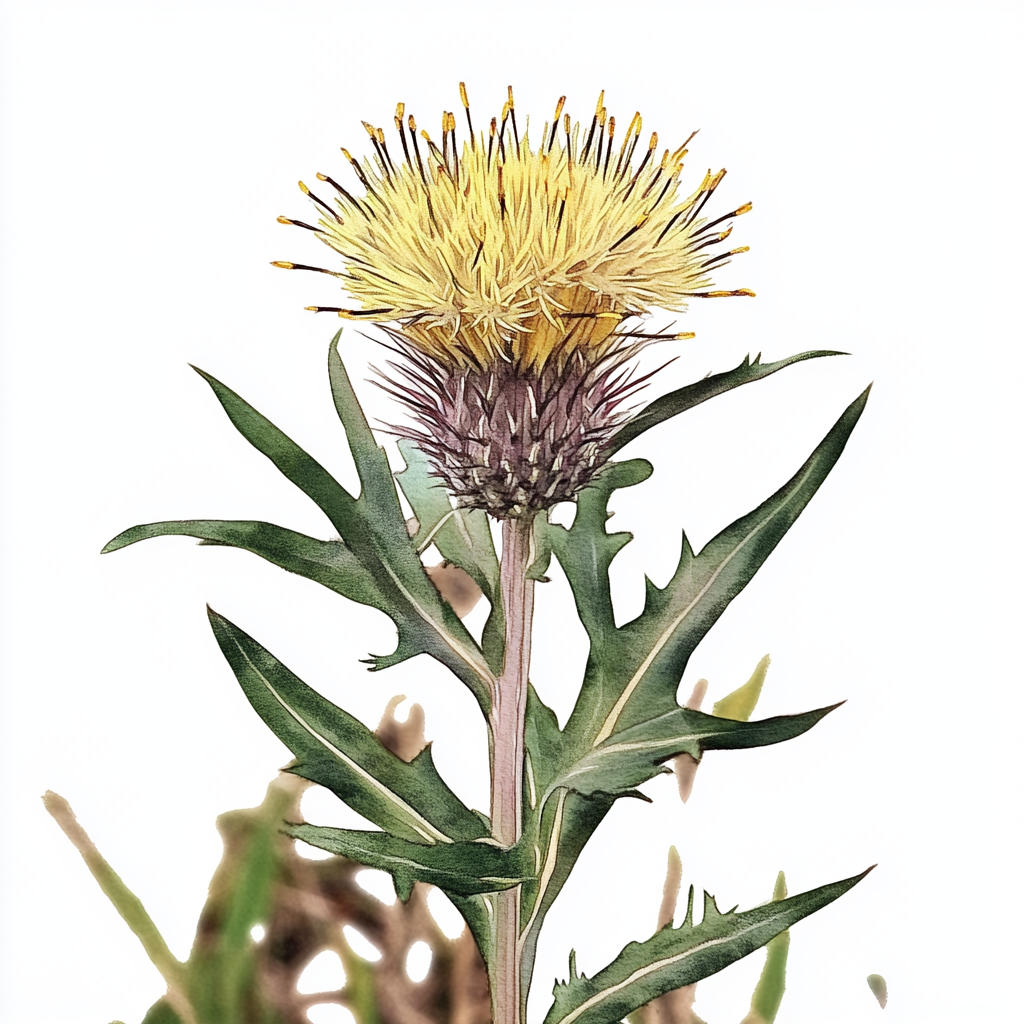
A bold, spiny native of the coastal plain with large, showy flower heads that can appear yellow, cream, or occasionally reddish-purple. Despite its spiky exterior, it is a beloved pollinator plant and an important part of coastal and meadow ecosystems along the northeastern coast. Rare in MA.
Native range: Coastal Plain from southern Maine to Florida, west to Texas
Size: Typically 2–5 feet tall
Growing conditions: Full sun; tolerates a wide range of soils from sandy to moist; often found near salt marshes, shores, and open fields; drought tolerant once established
Bloom period: May–August
Wildlife value: Excellent nectar source for native bees and butterflies, provides nesting material for bees
Garden benefits: Dramatic presence in meadow or naturalized settings; deer and rabbit resistant; self-seeds readily
A bold, spiny native of the coastal plain with large, showy flower heads that can appear yellow, cream, or occasionally reddish-purple. Despite its spiky exterior, it is a beloved pollinator plant and an important part of coastal and meadow ecosystems along the northeastern coast. Rare in MA.
Native range: Coastal Plain from southern Maine to Florida, west to Texas
Size: Typically 2–5 feet tall
Growing conditions: Full sun; tolerates a wide range of soils from sandy to moist; often found near salt marshes, shores, and open fields; drought tolerant once established
Bloom period: May–August
Wildlife value: Excellent nectar source for native bees and butterflies, provides nesting material for bees
Garden benefits: Dramatic presence in meadow or naturalized settings; deer and rabbit resistant; self-seeds readily