
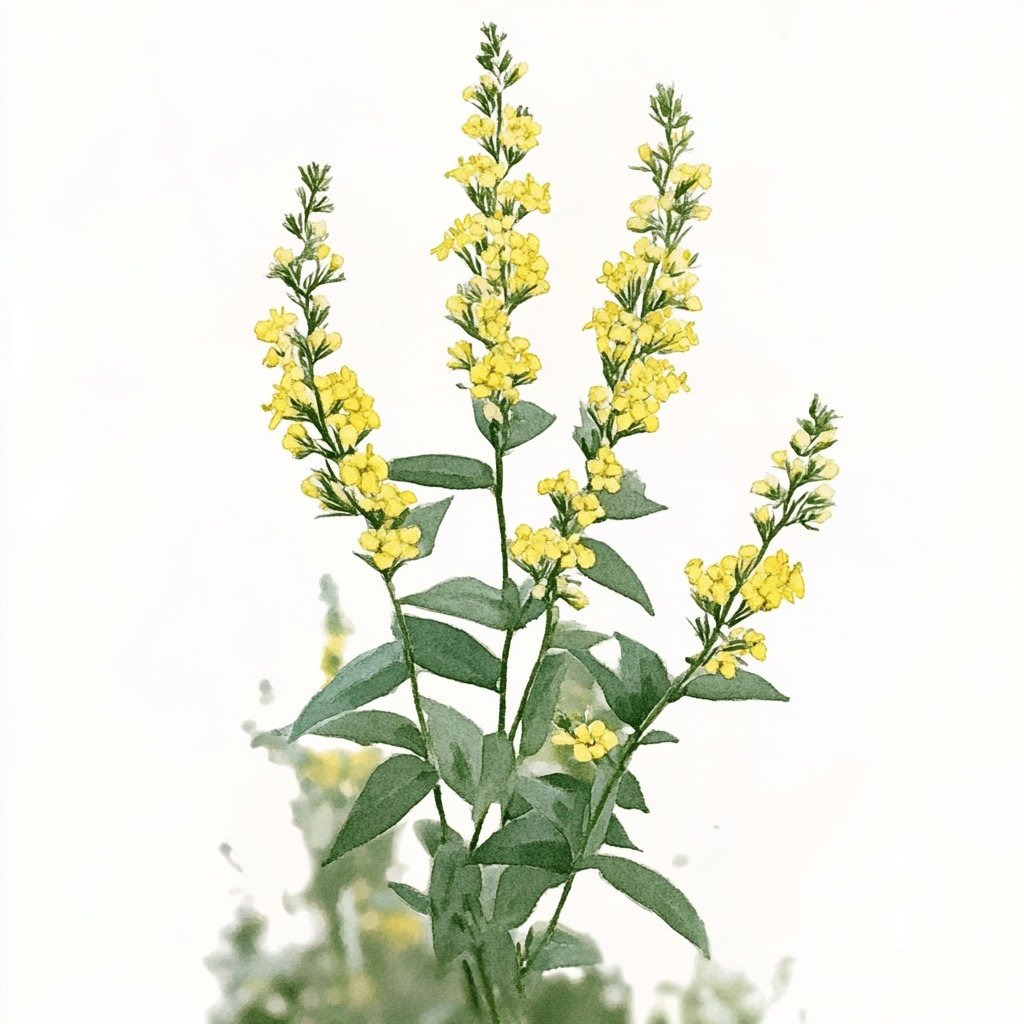
The goldenrod for shade gardeners. While most goldenrods demand full sun, zigzag goldenrod thrives under trees and along woodland edges, producing clusters of bright yellow flowers tucked into the leaf axils along its distinctive, slightly angular stems. It is well-behaved, non-aggressive, and one of the most valuable late-season pollinator plants available for shady spots.
Native range: Nova Scotia to North Dakota, south to Georgia and Arkansas
Size: 2-4 feet tall; spreads gently by rhizome
Growing conditions: Part shade to full shade; average to moist, well-drained soil; tolerates clay, dry soil, and tree root competition; very adaptable
Bloom period: August–October
Wildlife value: Nectar and pollen source for bees, wasps, flies, and butterflies; larval host for the Wavy-Lined Emerald moth and many other Lepidoptera
Garden benefits: One of the only goldenrods for shade; graceful, non-aggressive habit; excellent late-season color; deer resistant; low maintenance
The goldenrod for shade gardeners. While most goldenrods demand full sun, zigzag goldenrod thrives under trees and along woodland edges, producing clusters of bright yellow flowers tucked into the leaf axils along its distinctive, slightly angular stems. It is well-behaved, non-aggressive, and one of the most valuable late-season pollinator plants available for shady spots.
Native range: Nova Scotia to North Dakota, south to Georgia and Arkansas
Size: 2-4 feet tall; spreads gently by rhizome
Growing conditions: Part shade to full shade; average to moist, well-drained soil; tolerates clay, dry soil, and tree root competition; very adaptable
Bloom period: August–October
Wildlife value: Nectar and pollen source for bees, wasps, flies, and butterflies; larval host for the Wavy-Lined Emerald moth and many other Lepidoptera
Garden benefits: One of the only goldenrods for shade; graceful, non-aggressive habit; excellent late-season color; deer resistant; low maintenance